Caricamento pagina
hero_inspection_tech_MB

Visual Inspection

Visual Inspection Technologies for Pharma

Choosing the right inspection technology for your product

There is no one-size-fits-all approach to pharma visual inspection. Each product has specific characteristics, container formats, defect scenarios, and production requirements. Stevanato Group helps customers identify the most suitable inspection technology by combining product expertise, camera-based systems, leak detection methods, artificial intelligence, and advanced image analysis tools.

Our technologies support reliable particle inspection, cosmetic defect detection, and container integrity testing for a wide range of pharmaceutical products and primary packaging formats.

Our inspection capabilities at a glance

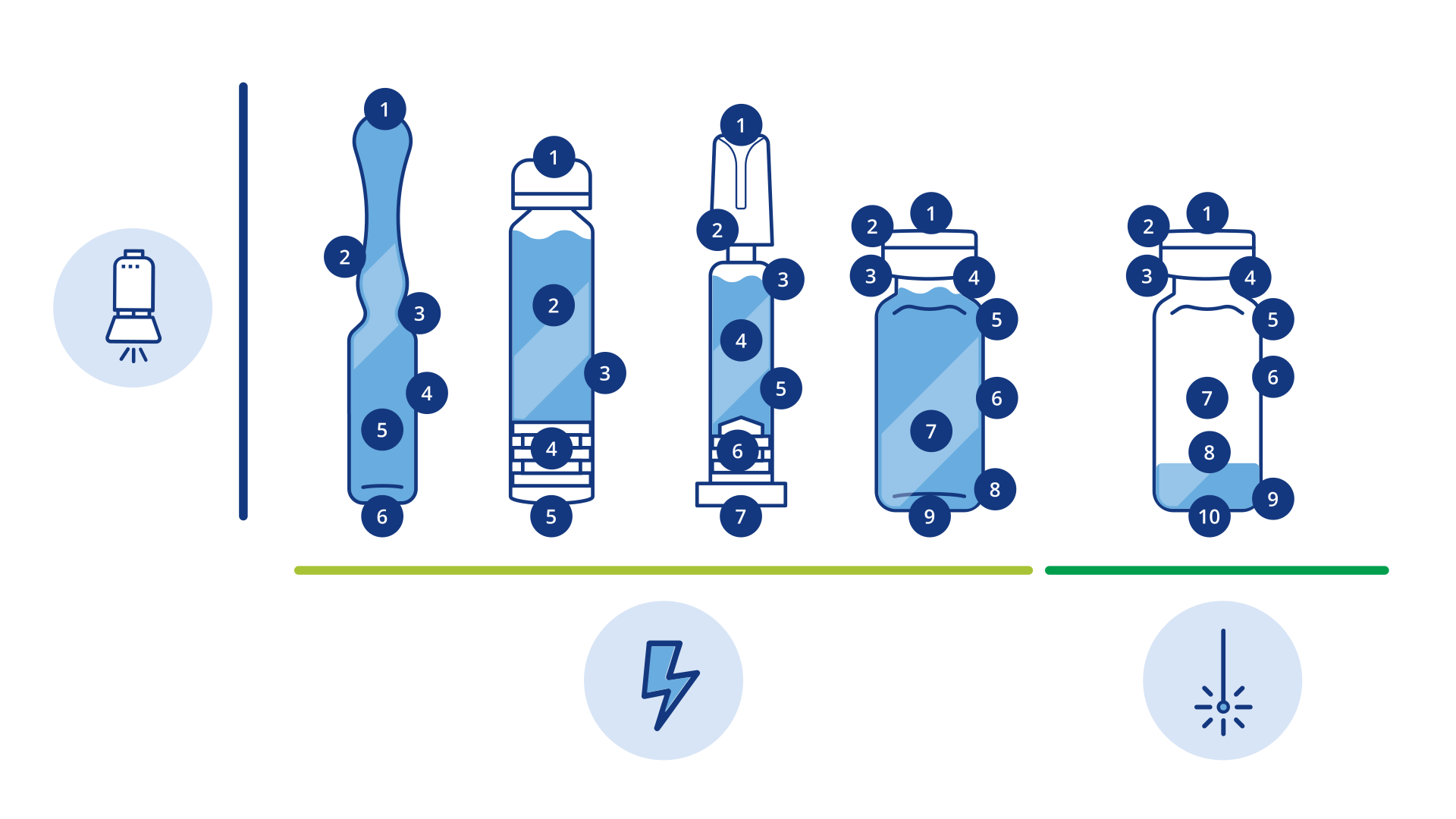
When dealing with pharma inspection, there is no “one-fits-all” solution. At Stevanato Group, we evaluate each product and its properties and recommend a technology that best suits your requirements.

Inspection_technologies_infographic
87cce3373f9849d2ec98eac46d68dd38e2c904df

1. 1. Top shape and cosmetics
2. Color Code Ring
3. OPC
4. Body
5. Particles
6. Bottom

87cce3373f9849d2ec98eac46d68dd38e2c904df

2. 1. Cap (seal disc, cap rubber)
2. Particles
3. Barrel
4. Plunger
5. Bottom

87cce3373f9849d2ec98eac46d68dd38e2c904df

3. 1. Cap
2. Neck
3. Shoulder
4. Particles
5. Barrel
6. Plunger (Top, presence)
7. Flange

87cce3373f9849d2ec98eac46d68dd38e2c904df

4. 1. Stopper
2. Cap (Alu)
3. Crimp
4. Neck
5. Shoulder
6. Barrel
7. Particles
8. Heel
9. Bottom

87cce3373f9849d2ec98eac46d68dd38e2c904df

5. 1. Stopper
2. Cap (Alu)
3. Crimp
4. Neck
5. Shoulder
6. Barrel
7. Particles
8. Cake
9. Heel
10. Bottom

Camera inspection: matrix and line scan cameras

Matrix and line scan cameras are core technologies for particle inspection and cosmetic defect detection in pharmaceutical containers. The choice between the two depends on the container format, the product characteristics, and the expected defect scenarios.

Stevanato Group configures each visual inspection camera system by combining the most suitable camera technology with optimized illumination, field of view, image acquisition, container spinning speed, and rotation scheme. This approach helps improve detection accuracy while reducing false rejects across different products and production requirements.

Applications of camera inspection technologies

Inspection of water-like products, clear and dark

For the inspection of water-like products, Stevanato Group uses particle tracking algorithms to detect particles with high reliability. This approach helps detect particles and reduce false rejects in challenging areas such as the meniscus or the bottom of the container.
For complex products and hard-to-detect defects, we utilize advanced inspection technologies such as bubble suppression methods.

Inspection of suspensions and milky drugs

For suspensions and turbid products, such as insulin, Stevanato Group combines both line scan and matrix cameras. Product homogenization, high-speed spinning, side light projection, and multiple inspection stations help increase detection performance while maintaining a low false rejection rate.

58e237eddb36d53d912d155b9f615c0d53967a56

Inspection of very viscous products

Very viscous products can make it difficult to distinguish particles inside the container from external defects. Stevanato Group’s line scan camera technology allows for reliable particle detection, even through printing.

Lyo_ParticlesEmbedded Lyo_ParticlesBottom Lyo_ParticlesTop

Inspection for lyophilized products

Lyophilized products are challenging because their surface appearance and cake structure can vary significantly. Dedicated lighting and image capture techniques help separate glass, particles, and lyophilized product topology, supporting more accurate automated inspection and reducing the risk of misclassification.

Container Closure Integrity Testing (CCIT) Technologies

Loss of sterility in parenteral products is one of the most critical risks for patient safety. Stevanato Group integrates container closure integrity testing technologies to verify container integrity and support product quality.

HVLD_Features

High-voltage leak detection

High-Voltage Leak Detection, or HVLD, is used for leak detection in containers filled with liquid products. It supports fast, objective, and non-destructive testing, including applications involving viscous liquids.

HGA_inspection_station_processing_vials

Headspace Gas Analysis

Headspace Gas Analysis, or HGA, is used to test containers filled with lyophilized products. It helps verify that headspace conditions are maintained, supporting sterility and stability for filled and finished packages.

Our digital solutions for visual inspection

Stevanato Group’s digital solutions for visual inspection help optimize inspection performance, reduce false rejects, and enhance the use of image and production data without interrupting operations.

Among these, the Digital Twin for Inspection enables the simulation of inspection station performance and the fine-tuning of parameters through the analysis of acquired images offline, saving production time.

The SG Vision AI platform, powered by Deep Learning models, enhances detection capabilities by increasing detection rates while minimizing false rejects.

Finally, Data Management solutions enable the collection and analysis of process data to support root cause investigations, corrective actions, and continuous product and process optimization.